
Importing pet treats and natural dog chews into the United States involves a coordinated set of federal food safety, animal health, labeling, and customs regulations. The U.S. Food and Drug Administration (FDA) classifies dog treats, yak cheese chews, cattle rawhide, pig ears, antlers, and other edible chews as animal food under the Federal Food, Drug, and Cosmetic Act (FD&C Act). Foreign manufacturers must meet FDA food facility registration, Current Good Manufacturing Practices (CGMP), and preventive control requirements under 21 CFR Part 507, while U.S. importers must establish a Foreign Supplier Verification Program (FSVP), file Prior Notice for each shipment, and maintain the documentation required for FDA entry review. Animal-origin ingredients also fall under USDA Animal and Plant Health Inspection Service (APHIS) regulations, which govern veterinary permits, health certificates, and country-of-origin restrictions associated with diseases such as foot-and-mouth disease (FMD) and African swine fever. U.S. Customs and Border Protection (CBP) separately verifies customs declarations, product origin, and shipment documentation.
Successful pet treat imports depend on matching each product’s ingredients, manufacturing process, country of origin, and shipping route with the applicable U.S. import requirements. Suppliers must demonstrate food safety controls, ingredient traceability, lot-specific laboratory testing, and compliant product labeling, while buyers must verify foreign suppliers, maintain written hazard analyses, and coordinate FDA, APHIS, and CBP documentation before shipment. Nepal-origin dog chews, including natural dairy-based products and other animal-derived treats, require additional attention to disease status, transit-country restrictions, veterinary certification, and product-specific APHIS determinations. Understanding these interconnected requirements helps manufacturers, exporters, and U.S. buyers prevent import detentions, shipment refusals, regulatory penalties, and unnecessary costs while establishing a reliable supply chain for compliant pet treats in the American market.
What Does the FDA Consider a Pet Treat or Dog Chew?
The FDA considers every pet treat and dog chew to be animal food, meaning chews, bones, and treats follow the same foundational safety and import regulations as dog kibble, though treats are exempt from carrying the ‘complete and balanced’ nutritional adequacy statement required on daily pet food labels.
FDA Classification of Pet Treats as Animal Food
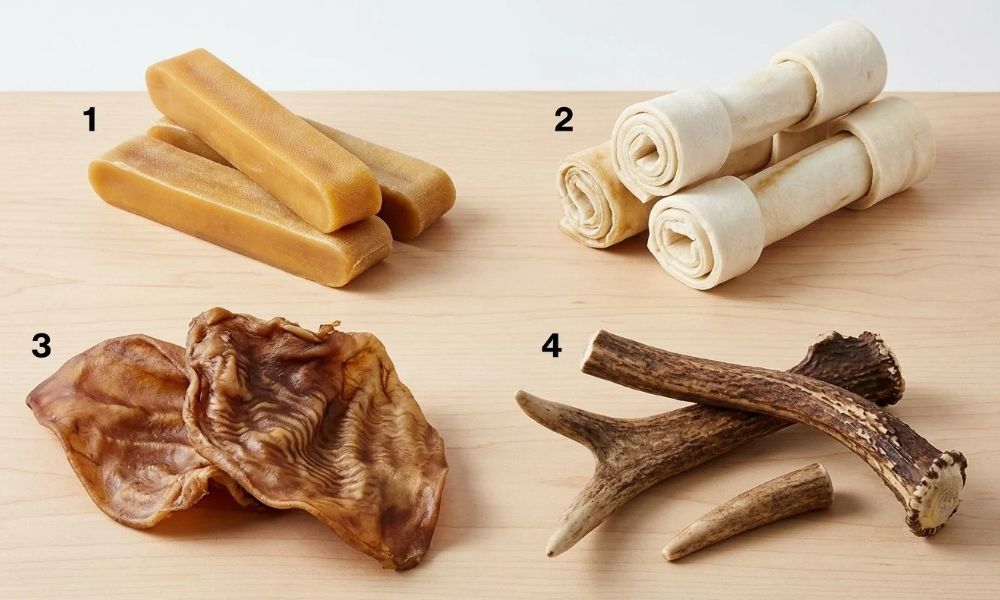
According to the FDA Center for Veterinary Medicine, animal feed includes pet food and pet treats for dogs and cats, along with food for farm animals. The agency recognizes no separate “chew” category. A yak cheese chew, a cattle rawhide roll, a dried pig ear, and a freeze-dried liver cube all sit in the same regulatory class.
Animal food needs no FDA pre-market approval, but every ingredient must meet one of 3 standards: an approved food additive under 21 CFR 573, generally recognized as safe (GRAS) status under 21 CFR 582, or a definition in the Official Publication of the Association of American Feed Control Officials (AAFCO). The FDA states that GRAS status for human food does not carry over to animal food. A botanical coating that passes in a human snack can fail as a dog chew ingredient.
Animal-Derived Ingredients and Import Regulations
Ingredient origin decides the import path. The FDA governs safety and labeling, while USDA APHIS governs animal disease risk. Four ingredient families trigger APHIS review: ruminant hides and skins, ruminant ears, hooves, and tendons, dairy such as yak and cow milk cheese, and pork products such as pig ears.
Under 9 CFR 94.1, APHIS considers foot-and-mouth disease (FMD) present in every region it has not declared free. A chew carries the disease status of its source region, and of any region it transits. Buyers who treat “natural chew” as one low-risk category discover the difference at the port.
What FDA Regulations Apply to Imported Pet Treats?
Four layers of FDA regulation apply to imported pet treats: the FD&C Act, the Bioterrorism Act’s registration and Prior Notice rules, the FSMA animal food preventive controls rule (21 CFR Part 507), and the FSMA Foreign Supplier Verification Program (21 CFR Part 1, Subpart L). Each layer assigns duties to a different party.
Federal Food, Drug, and Cosmetic Act Requirements
Sections 402 and 403 of the FD&C Act require animal food to be safe and wholesome, free of harmful or unapproved substances, and truthfully labeled. A treat violates section 402 when it carries Salmonella, an unapproved additive, or filth. A treat violates section 403 when the label misstates ingredients, weight, or origin. A treat also becomes an unapproved animal drug when its label claims to diagnose, treat, or prevent disease.
At entry, the FDA’s automated system electronically verifies key data elements: the manufacturer’s food facility registration, the confirmed Prior Notice, and the FSVP importer DUNS number. If the shipment is flagged for a physical examination, FDA inspectors will then manually verify product labeling and packaging compliance.
FDA Facility Registration and Prior Notice
Facility registration. Every foreign facility that manufactures, processes, packs, or holds animal food for U.S. consumption registers with the FDA, names a U.S. agent, and supplies a DUNS number as its unique facility identifier. Registration carries no fee. Renewal happens every even-numbered year between October 1 and December 31, and the FDA treats any registration not renewed by December 31, 2026, as expired. The FDA holds food from an unregistered foreign facility at the port until registration is complete.
Prior Notice. Anyone with knowledge of the shipment, including the importer, files Prior Notice before the food arrives. The FDA must confirm the filing no later than these times before arrival:
- Road shipments: 2 hours
- Rail shipments: 4 hours
- Air shipments: 4 hours
- Water shipments: 8 hours
Filing through the FDA Prior Notice System Interface opens 15 calendar days before arrival, and filing through ABI/ACE opens 30 days before. The confirmation number accompanies the shipment. Every Prior Notice cites the manufacturer’s valid FDA registration number, and an invalid number triggers immediate rejection.
Food Safety Modernization Act (FSMA) Requirements
The Food Safety Modernization Act (FSMA) shifted FDA oversight from reacting to contamination to preventing it. Three FSMA rules reach pet treat imports: Preventive Controls for Animal Food (21 CFR Part 507) for manufacturers, the FSVP rule for importers, and Sanitary Transportation of Human and Animal Food (21 CFR Part 1, Subpart O) for carriers and shippers.
Qualified facilities, which average less than $2.5 million per year in animal food sales (adjusted for inflation)—or meet the separate alternative route under 21 CFR 507.3 where average annual gross sales directly to qualified end-users exceed sales to all other buyers and total animal food sales average less than $500,000—follow modified requirements and file a qualified facility attestation. According to the FDA Constituent Update of September 29, 2026, that attestation falls in the same October 1 to December 31 window as registration renewal.
What Is the Foreign Supplier Verification Program (FSVP)?
The Foreign Supplier Verification Program is the FSMA rule (21 CFR Part 1, Subpart L) that requires each U.S. importer to verify, in writing, that every foreign supplier produces food to U.S. safety standards. The importer, not the overseas factory, owns the program.
FSVP Responsibilities and Importer Compliance
The FSVP importer is the U.S. owner or consignee of the food at the time of entry. When neither exists, the importer is the U.S. agent or representative of the foreign owner. A standard FSVP contains 7 elements:
- Appoint a qualified individual to develop the program.
- Write a hazard analysis for each food.
- Evaluate the food’s risk and the supplier’s performance.
- Approve each foreign supplier in writing.
- Run verification activities, such as on-site audits, sampling and testing, or record reviews.
- Document corrective actions.
- Reevaluate every 3 years, or sooner when new hazard information appears.
The importer builds one FSVP for each food and supplier pairing and identifies itself at entry with its name, email address, and DUNS number.
Very small importers, which average less than $2.5 million per year in animal food sales plus the U.S. market value of animal food imported, manufactured, processed, packed, or held without sale over the preceding 3 years (adjusted for inflation), follow modified requirements. They document eligibility every year and collect written assurance from the supplier before the first shipment and every 2 years afterward that the supplier meets Part 507-level protections.
Foreign Supplier Verification and Required Documentation
An FDA inspector asks for 6 records during an FSVP inspection:
- A written hazard analysis for each food
- An evaluation of the food’s risk and the supplier’s performance
- A written supplier approval
- Written procedures for importing only from approved suppliers
- Records of verification activities, such as audit reports, certificates of analysis, and test results
- Records of corrective actions
The August 2026 warning letter shows how inspectors read these records. The importer told the investigator it required certificates from each supplier and had identified Salmonella and Listeria as hazards. It produced neither the certificates nor a written hazard analysis. A certificate on file does not replace a hazard analysis.
For dog chews, the hazard analysis covers biological hazards (Salmonella, Listeria monocytogenes), chemical hazards (mycotoxins, drug residues, heavy metals), and physical hazards (metal fragments, bone shards).
Consequences of FSVP Noncompliance
Importing food without an FSVP is a prohibited act under section 301(zz) of the FD&C Act. The FDA can refuse admission under section 801(a)(3) and can place an importer’s products on detention without physical examination under Import Alert 99-41.
Enforcement is current. The FDA issued FSVP-related warning letters to animal food importers on September 24, 2025, March 27, 2026, and August 5, 2026. Each letter sets a response deadline of 15 working days.
What USDA and APHIS Requirements Apply to Imported Dog Chews?
USDA APHIS regulates animal-origin ingredients to keep foreign livestock diseases out of the United States. Chews made with ruminant, dairy, or pork material from regions with foot-and-mouth disease or African swine fever generally require an APHIS Veterinary Services import permit unless a published guideline exempts them.

Import Permits and Country-of-Origin Restrictions
According to the FDA, a VS permit is generally required for pet chews and treats that contain animal-origin material, including dairy, from countries with livestock diseases exotic to the United States. Importers apply through APHIS eFile or contact APHIS Veterinary Services at apie@usda.gov or 301-851-3300, option 4.
The APHIS Animal Health Status of Regions page lists which countries qualify as FMD-free. Transit counts: a shipment that enters a port in or passes through an FMD region falls under the same restrictions. Landlocked origins such as Nepal always involve a transit route, so the routing belongs in the compliance file.
Veterinary Health Certificates and Animal Product Regulations
A veterinary health certificate is an original document signed by a full-time salaried government veterinarian of the exporting country. APHIS Guideline 1119 requires one for antlers, naming the FMD-free country of origin and stating that the antlers are clean, dry, and free of soil, tissue, and undried hide.
Every animal-origin shipment, including those exempt from permits, passes inspection by CBP agriculture specialists at the port of arrival. APHIS recommends presenting supporting documents as a separate packet and never sealing them inside the shipping container.
Import Rules for Rawhide and Natural Animal-Based Chews
The following table summarizes APHIS Guideline 1119 (which specifically covers antlers and rawhide) alongside general APHIS import permit rules for other common animal-based chew types, showing the permit status and governing condition for each product.
| Chew type | APHIS permit status | Governing condition |
|---|---|---|
| Plain cattle rawhide (cut, molded, or sheets) | No permit | Not ground, flavored, basted, colored, or otherwise processed |
| Processed cattle rawhide | VS permit required | Applies to ground, flavored, basted, or colored product |
| Pork hide labeled “rawhide” | VS permit required | Rawhide means untanned cattle skin only |
| Plain, naturally shed antlers | No permit | FMD- and rinderpest-free origin plus an original government veterinary certificate |
| Antlers from FMD-affected regions, or antlers in velvet | VS permit required | Exception for consignment to an approved establishment |
| Dairy chews, ruminant ears, hooves, tendons | Written APHIS determination before first shipment | FDA states that permits generally apply to animal-origin chews from FMD regions |
Dairy chews, ruminant ears, hooves, and tendons deserve special attention. While obtaining a written APHIS determination before shipment is strongly recommended for these products, specific entry requirements depend on exact animal origin, manufacturing processing steps, and transit routing. Under 9 CFR 94.16, plain cheese is exempt from milk product restrictions, but the exemption excludes cheese with liquid and cheese containing other regulated items. Whether a dried cheese chew qualifies depends on its exact formulation, so importers obtain APHIS’s written determination for that formulation before the first purchase order.
What Documents Are Required to Import Pet Treats into the USA?
Every pet treat shipment needs an FDA facility registration number, a confirmed Prior Notice, a commercial invoice, a packing list, a bill of lading or air waybill, the importer’s FSVP DUNS number, and any APHIS permit or veterinary certificate covering the animal-origin ingredients.

FDA Registration and Prior Notice Records
The import file holds the registration confirmation and 2026 renewal confirmation for each facility, the facility DUNS number, the Prior Notice confirmation number, and the FSVP importer DUNS number filed with CBP at entry. Ocean shipments also require an Importer Security Filing, due 24 hours before loading at the foreign port. FSVP records stay available for FDA review for at least 2 years.
Commercial Invoices, Packing Lists, and Certificates of Origin
The table below lists the core shipment documents, who produces each one, and which agency checks it.
| Document | Produced by | Checked by |
|---|---|---|
| FDA registration confirmation | Manufacturer | FDA |
| Prior Notice confirmation | Importer, broker, or supplier | FDA and CBP |
| Commercial invoice | Supplier | CBP |
| Packing list with lot codes | Supplier | CBP and FDA |
| Bill of lading or air waybill | Carrier | CBP |
| APHIS permit or veterinary certificate | APHIS or government veterinarian | CBP agriculture specialists |
| Lot-specific laboratory report | Accredited laboratory | Importer and FDA |
The invoice describes the product precisely, such as “yak and cow milk cheese chew” rather than “dog snack,” and lists the manufacturer’s name and address exactly as registered with the FDA. The packing list ties lot codes to cartons. Country of origin documentation supports CBP marking and duty classification.
Product Specifications and Laboratory Test Reports
A specification sheet states ingredients, process steps, moisture or water activity limits, shelf life, and packaging. Laboratory reports come from an ISO/IEC 17025-accredited laboratory and cover Salmonella, Enterobacteriaceae, and Listeria monocytogenes for each lot. Reports must carry lot codes that match the packing list. According to FDA Import Alert 71-04, private laboratory analysis of representative samples counts as evidence that a detained shipment is free of Salmonella.
What Are the FDA Labeling Requirements for Imported Pet Treats?
FDA labeling rules in 21 CFR Part 501 require four elements on package-form treats: a statement of identity, the net quantity of contents, an ingredient list in descending order by weight, and the name and place of business of the manufacturer, packer, or distributor, all in English and prominently displayed.
Ingredient Declaration and Product Identification
Section 501.3 requires the statement of identity on the principal display panel in bold type, sized reasonably in relation to the most prominent printed matter on the panel. Section 501.4 requires ingredients listed by common or usual name in descending order of predominance by weight, using AAFCO Official Publication names. A list reading “yak milk, cow milk, salt, lime juice” passes. A list reading “natural cheese” fails.
Section 501.18 defines misbranding, which includes false or misleading ingredient and identity statements. Treats labeled as treats or snacks carry no “complete and balanced” nutritional adequacy statement and never claim one.
Net Weight and Manufacturer Information
The net quantity appears on the principal display panel in both U.S. customary and metric units, such as 8 oz (227 g). Section 501.5 requires the name and place of business of the manufacturer, packer, or distributor. A U.S. distributor’s name works when the label says “distributed by,” and the distributor’s city, state, and ZIP code appear.
CBP separately requires the country of origin, such as “Product of Nepal,” on the retail container. Federal Part 501 labeling rules operate alongside AAFCO-based state pet food registration and labeling requirements, which vary by state. Lot codes are not a federal labeling element for treats, but Part 507 recall readiness depends on them.
Nutritional Claims and Packaging Compliance
Claims that a chew treats, prevents, or cures a condition convert the product into an unapproved animal drug. Dental, joint, and calming claims receive the closest review. “Natural” follows the AAFCO definition, which excludes chemically synthetic ingredients and processes.
Most states also require product registration under AAFCO-based pet food laws, with fees and renewal dates that vary by state. Packaging film and liners must qualify as FDA-compliant food-contact materials.
What Food Safety and Quality Standards Must Pet Treat Suppliers Meet?
Pet treat suppliers must comply with 21 CFR Part 507: Current Good Manufacturing Practices (CGMP) plus a written food safety plan containing a hazard analysis, preventive controls, a supply-chain program, a recall plan, and verification procedures, unless the facility qualifies for the modified requirements.

Good Manufacturing Practices and HACCP
Part 507, Subpart B sets CGMP for personnel, plant and grounds, sanitation, equipment, processes and controls, and warehousing. Hazard Analysis and Critical Control Points (HACCP) is the 7-principle system that identifies hazards and controls them at critical points. Part 507 keeps that logic and expands it into preventive controls, supervised by a Preventive Controls Qualified Individual (PCQI).
The September 2025 warning letter to a bully stick importer lists the food safety plan components the FDA checks: the plan itself (21 CFR 507.31), the hazard analysis (507.33), preventive controls (507.34), the supply-chain program, corrective action procedures (507.42), and verification procedures (507.49). For dairy chews, the controls center on a validated heat step, drying to a set moisture or water activity limit, metal detection, and clean post-process handling.
A GFSI-benchmarked audit certificate supports supplier approval. It does not substitute for the written hazard analysis.
Microbiological Testing and Contamination Prevention
According to FDA Compliance Policy Guide 690.800, pet food contaminated with Salmonella, in any serotype, is adulterated under section 402(a)(1) when it receives no later kill step. The policy defines pet food to include treats and chews, and a finished chew has no later kill step. The guide cites Salmonella Infantis in pig-ear treats made in Canada in 1999 and Salmonella Thompson outbreaks tied to pet treats.
FDA Import Alert 71-04 (republished on October 23, 2026) covers all animal food, including pet treats, found to contain Salmonella. It absorbed former pig-ear alert 72-03, which was officially deactivated on April 11, 2025, after firms and products were transferred to 71-04 around April 8, 2025. Suppliers prevent contamination with 5 practices:
- Separate raw and finished product zones
- Monitor the environment with swabs in finished product areas
- Cool and dry product to validated limits before packing
- Control pests and moisture in storage
- Hold each lot until laboratory results return negative
Product Traceability and Quality Control
Traceability links every retail bag to a production date, a batch record, raw material lots, and the shipment. For dairy chews, raw material records name the milk collection center and collection date. Suppliers keep retention samples from every lot through its shelf life and run mock recalls at least once per year.
The Reportable Food Registry requires a registered facility to report within 24 hours when it finds a reasonable probability that its food causes serious adverse health consequences. The Part 507 recall plan (21 CFR 507.38) sets who calls whom, and in what order.
What Happens When Imported Pet Treats Fail FDA Requirements?
The FDA detains noncompliant shipments at the port, issues a Notice of FDA Action, and gives the importer 10 business days to submit evidence. Unresolved shipments are refused and must be exported or destroyed within 90 days, and repeat problems lead to import alerts.
FDA Import Detentions, Refusals, and Import Alerts
A failed shipment moves through 6 steps:
- The FDA reviews the entry and Prior Notice.
- The FDA examines or samples the product.
- The FDA issues a Notice of Detention and Hearing.
- The importer submits testimony within 10 business days (notices often state up to 20 calendar days).
- The FDA refuses admission when the violation stands.
- The importer exports or destroys the product under CBP and FDA supervision within 90 days.
CBP assesses liquidated damages against the importer’s bond when the 90-day deadline passes. Import alerts extend the problem to future shipments: Import Alert 71-04 targets Salmonella in animal food, and Import Alert 99-41 targets FSVP failures. Both authorize detention without physical examination.
Common Documentation and Compliance Issues
Seven issues cause most detentions:
- Expired or missing facility registration
- Prior Notice naming a different manufacturer than the actual producer
- Missing FSVP importer DUNS number at entry
- Labels missing identity, net quantity, or manufacturer information
- Absent APHIS permit or veterinary certificate
- No written hazard analysis in the importer’s file
- Laboratory reports without lot codes
The August 2026 warning letter documents the second item: the manufacturer transmitted during importation differed from the establishment that actually made the pig ears.
Financial and Legal Risks of Noncompliance
A detained container accrues storage and demurrage charges every day it waits. Refusal adds re-export freight or destruction fees, laboratory costs, and liquidated damages on the bond. A recall adds retailer chargebacks and lost accounts.
The legal exposure is larger. Warning letters are public on FDA.gov, prohibited acts under section 301 carry civil and criminal penalties, and the FDA can suspend the registration of a facility whose food presents a reasonable probability of serious adverse health consequences.
How Can Buyers and Suppliers Ensure Compliant Pet Treat Imports?
Buyers and suppliers ensure compliance by splitting duties and verifying each other’s documents before shipment. Suppliers maintain registration, Part 507 controls, and lot-level test data. Buyers maintain the FSVP, DUNS number, Prior Notice, APHIS clearance, and label review.
Foreign Supplier Verification and Buyer Due Diligence
Buyer due diligence follows 6 steps before the first purchase order:
- Request the facility’s current FDA registration and 2026 renewal confirmation
- Review the written food safety plan and hazard analysis
- Audit the plant onsite, or review a third-party audit that covers Part 507
- Test samples from the first production lots at an independent laboratory
- Search FDA warning letters and import alerts for the supplier’s name
- Confirm the supplier’s U.S. agent and the manufacturer name that appears on Prior Notice
Supplier contracts add 3 clauses: advance notice of ingredient, process, or facility changes, audit rights, and a corrective action timeline. Suppliers run the check in reverse by asking the buyer for its FSVP DUNS number and very small importer status.
Import Compliance Checklist and Shipment Preparation
The checklist below runs in the order a shipment is built.
- Classify the product and list every animal-origin ingredient.
- Obtain APHIS’s written determination or permit for those ingredients.
- Confirm facility registration and DUNS numbers.
- Complete the FSVP file, including the hazard analysis.
- Approve the label against 21 CFR Part 501 before printing.
- Collect lot-specific laboratory reports.
- Match the invoice and packing list to the registered manufacturer name.
- File Prior Notice 24 to 48 hours ahead, well beyond the 2 to 8 hour minimums.
- File the Importer Security Filing for ocean shipments.
- Keep copies of all records for FDA review.
How Can Native Nepal Dog Chew Support US Pet Treat Buyers?
Native Nepal Dog Chew supplies natural dog chews from Nepal and organizes its buyer documentation around the FDA, USDA APHIS, and CBP requirements in this guide, so U.S. buyers receive the records their FSVP, Prior Notice, and entry filings call for.
Natural Dog Chew Sourcing and Supplier Compliance
Buyers working with Native Nepal Dog Chew request 5 items before placing an order:
- The facility’s FDA registration confirmation and U.S. agent details
- An ingredient list traceable to its source
- Lot-specific laboratory reports for Salmonella and other hazards
- A label review against 21 CFR Part 501 before artwork goes to print
- Support in preparing the APHIS question for the exact formulation
Next step: Request the supplier documentation set from Native Nepal Dog Chew before your first purchase order, then compare it against the checklist above.
What Should Buyers Know About Importing Pet Treats from Nepal?
Nepal’s disease status shapes every Nepal-origin chew. APHIS considers FMD present in all regions it has not declared free, and Nepal is not on that list. APHIS also added Nepal to its African swine fever list effective May 23, 2022, which puts pork-based chews from Nepal under swine restrictions.
The export trade is established. According to the Kathmandu Post in June 2023, dog chew exports were on track to reach about NPR 3 billion in the fiscal year, rivaling tea, and one exporter noted that Europe does not allow dairy products from Nepal. The U.S. market carries that demand, which makes U.S. compliance the commercial priority.
The Nepal Trade Preference Program (NTPP) expired on December 31, 2025, meaning Nepal-origin pet treats now face standard Most-Favored-Nation (MFN) tariff rates. U.S. buyers must have a licensed customs broker confirm the correct HTS classification and applicable MFN duty costs before finalizing import pricing.
FDA requirements for importing pet treats require preparation. A registered facility, a written FSVP, a lot-tested product, a compliant label, and APHIS clearance together turn a Nepal-origin chew into a routine entry.
This guide summarizes federal requirements as of October 2026 and is not legal advice. Confirm current rules with the FDA, APHIS, CBP, and a licensed customs broker before shipping.